Key Features to Look for When Selecting a Trading Broker
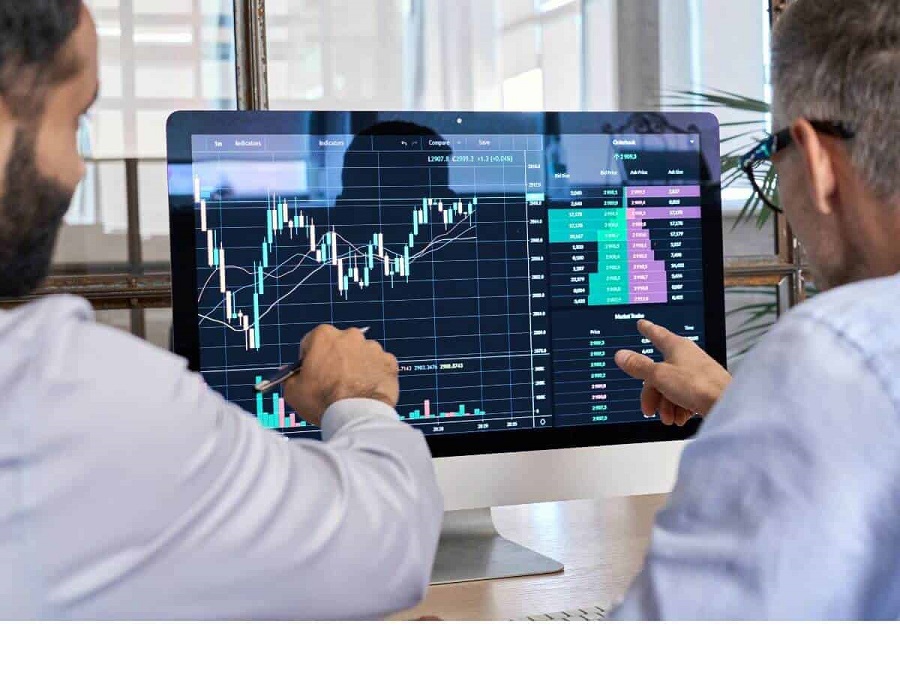
The digital expansion of financial markets has democratized access to global exchanges, allowing anyone with an internet connection to trade stocks, options, currencies, and futures. However, this accessibility has also flooded the market with hundreds of retail brokerages, each claiming to offer the best platforms, lowest costs, and fastest execution speeds. For an active trader, selecting the wrong broker is an expensive mistake that can lead to slipped orders, hidden account drains, and substandard technology that hinders decision making.
Evaluating a trading broker requires a meticulous analysis of infrastructure, regulatory compliance, pricing details, and technological capabilities. This guide outlines the essential features serious traders must investigate before funding an account.
Regulation and Asset Security
The fundamental baseline for any trading broker is its regulatory status. Under no circumstances should a trader compromise on the safety of their capital, regardless of how attractive a platform’s trading terms may seem.
Top-Tier Regulatory Oversight
A reputable broker must operate under the strict supervision of recognized regulatory authorities in the regions where it offers services. In the United States, look for registration with the Securities and Exchange Commission (SEC) and membership in the Financial Industry Regulatory Authority (FINRA). For derivatives and commodities trading, the broker must be registered with the Commodity Futures Trading Commission (CFTC) and be a member of the National Futures Association (NFA). Internationally, equivalent top-tier regulators include the Financial Conduct Authority (FCA) in the United Kingdom and the Australian Securities and Investments Commission (ASIC).
Capital Protection Schemes
Traders should verify what consumer protection frameworks apply to their accounts. In the US, membership in the Securities Investor Protection Corporation (SIPC) is mandatory for securities brokers. SIPC protects customer accounts up to $500,000, which includes a maximum of $250,000 for cash claims, in the event of brokerage insolvency. Many institutional retail brokers secure additional private insurance policies, commonly referred to as excess SIPC coverage, to protect high-net-worth trading accounts holding millions in equity.
Order Execution Quality and Routing Technology
For active traders, a difference of a fraction of a cent per share can dictate whether a strategy is profitable. The mechanisms a broker uses to execute your orders are just as critical as the price of the asset itself.
Speed and Latency
Order execution speed measures how fast a broker routes your order to the exchange or market maker and receives a confirmation. High-quality platforms boast execution latencies measured in milliseconds. Fast execution minimizes slippage, which is the difference between the expected price of a trade and the actual price at which it fills. Slippage is particularly costly during high-volatility events, such as corporate earnings releases or major macroeconomic data announcements.
Payment for Order Flow and Routing Transparency
Many retail brokers offer zero-commission stock trading because they earn revenue through Payment for Order Flow (PFOF). In this arrangement, the broker routes your order to wholesale market makers rather than directly to a public exchange like the New York Stock Exchange. While PFOF can result in price improvement for standard retail orders, it can create a conflict of interest. Serious traders often prefer brokers that offer direct-market access (DMA) or smart order routing (SOR) technology, which allows the user to manually select the specific exchange or venue to maximize execution quality.
Trading Platforms and Technical Infrastructure
The trading software serves as your workspace, command center, and portal to the markets. A trading platform must be stable, customizable, and capable of processing massive streams of real-time data without crashing.
Advanced Charting Software and Indicators
A professional platform should offer institutional-grade charting packages. This includes support for diverse chart types, customizable timeframes ranging from tick charts to monthly views, and an extensive library of technical indicators like moving averages, relative strength index (RSI), and Bollinger Bands. The platform should also feature robust drawing tools for trendline analysis and support-resistance mapping.
Multi-Platform Synchronization
Modern trading demands flexibility. A top-tier broker provides a unified experience across three distinct environments:
-
Downloadable Desktop Application: The primary vehicle for active traders, designed to utilize maximum hardware capabilities for multi-monitor setups, complex hotkey configurations, and algorithmic execution.
-
Web-Based Interface: A flexible browser platform that requires no installation but maintains essential charting and ordering capabilities for access from any machine.
-
Mobile Application: A streamlined, highly stable app engineered for monitoring active positions, adjusting risk thresholds, and entering emergency exit orders while away from the trading desk.
Comprehensive Fee Transparency and Cost Structures
The shift toward zero-commission trading has made evaluating broker costs more complex. Financial institutions have adapted by implementing subtle fees that can degrade a trading account over time.
Derivative and Asset-Specific Costs
While standard domestic equities and exchange-traded funds are widely commission-free, other asset classes carry clear friction costs. Options trading usually incurs a contract fee, commonly between $0.50 and $0.65 per contract. Futures trading involves exchange clearing fees and broker execution commissions per side. Forex traders must pay close attention to the bid-ask spread, as brokers often build their entire profit margin directly into wider spreads rather than charging an upfront commission.
Margin Interest Rates
Trading on leverage requires borrowing money from your broker, and the interest rate charged on that balance varies wildly across the retail landscape. Brokers frequently use tiered margin pricing, where larger account balances qualify for lower interest rates. High margin rates can completely eliminate the profits generated by successful swing trading strategies that hold leveraged positions open across multiple weeks or months.
Market Data Access and Research Capabilities
Traders cannot execute profitable strategies without clean, unfiltered information. The type of data data feeds your broker provides directly impacts your execution accuracy.
Real-Time Level 1 and Level 2 Data
Level 1 market data provides standard real-time quotes, including the current best bid, best ask, and trading volume for a security. Active intraday traders and scalpers require Level 2 market data, which displays the market depth or the order book. This shows the specific sizes and prices of orders waiting to be executed at various price points outside the immediate bid and ask, providing a visual representation of supply and demand imbalances.
Analytical and Screening Tools
Brokers should equip traders with dynamic scanning and screening tools. A stock or options scanner allows you to filter thousands of securities in real time based on parameters such as unusual options volume, implied volatility spikes, technical chart breakouts, or fundamental valuation ratios.
Risk Management Features and Order Variety
Preserving capital is the most crucial attribute of long-term trading survival. A broker must provide advanced tools that allow you to automate risk mitigation.
Complex Conditional Orders
Standard market and limit orders are insufficient for advanced strategies. High-quality brokers provide access to conditional orders that execute automatically based on specific market triggers. Essential order types include:
-
Stop-Loss Orders: Automatically liquidates a position at a predetermined price point to cap potential losses.
-
Trailing Stops: A stop-loss order that automatically adjusts upward or downward as the market moves in your favor, locking in profits while maintaining a defined risk ceiling.
-
One-Cancels-the-Other (OCO): A bracket order where entering a profit target take-profit order and a protective stop-loss order simultaneously ensures that if one triggers, the other is automatically cancelled.
Frequently Asked Questions
What is the difference between a market maker broker and a direct market access broker?
A market maker broker, often called a dealing desk broker, acts as the counterparty to your trades. When you buy, they sell to you from their inventory or match your order internally with another client, occasionally leading to a conflict of interest regarding execution prices. A direct market access broker routes your orders directly to public exchanges and electronic communication networks, allowing you to interact with the broader global liquidity pool without intermediary intervention.
Why do some brokers require a higher account minimum for options or futures trading?
Options and futures are leveraged derivative instruments that carry significantly higher risk profiles than standard equities. Regulators and brokerage firms enforce higher minimum account balances and strict approval tiers for these assets to ensure the trader possesses sufficient capital to absorb potential losses and avoid entering a negative equity balance.
What is hard to borrow stock and how does it affect short sellers?
When a trader wants to short sell a stock, the broker must first locate and borrow the shares from an internal or external inventory. If a stock has low availability due to high short interest or a small public float, it is classified as hard to borrow. Brokers often pass on the locating costs to the trader in the form of daily hard to borrow fees, which can dynamically change based on market supply and demand dynamics.
How does a broker margin call work and how much time do I have to respond?
A margin call occurs when the equity in your trading account falls below the maintenance margin requirement set by the broker or regulators. This usually happens when leveraged positions move against you. While brokers may theoretically give you a few days to deposit cash or liquidate securities to resolve the deficit, during fast moving markets, the broker reserves the right to automatically liquidate your positions without warning to protect its own capital.
Can the stability of a broker’s trading platform change during high volume market events?
Yes. During extreme market events, such as unexpected monetary policy shifts or systemic economic shocks, retail brokerage infrastructure experiences massive surges in user logins and data processing demands. Substandard platforms may suffer from delayed data feeds, order routing bottlenecks, or complete system outages, highlighting the necessity of choosing a broker with a proven institutional architecture.
What are regulatory transaction fees and are they charged by the broker?
Regulatory fees, such as SEC section 31 fees or FINRA trading activity fees, are not implemented by the brokerage firm. These are nominal charges mandated by federal regulators to cover the costs of government supervision and market regulation. Brokers simply collect these fractions of a cent per trade from the client and pass them directly to the appropriate regulatory agencies.